

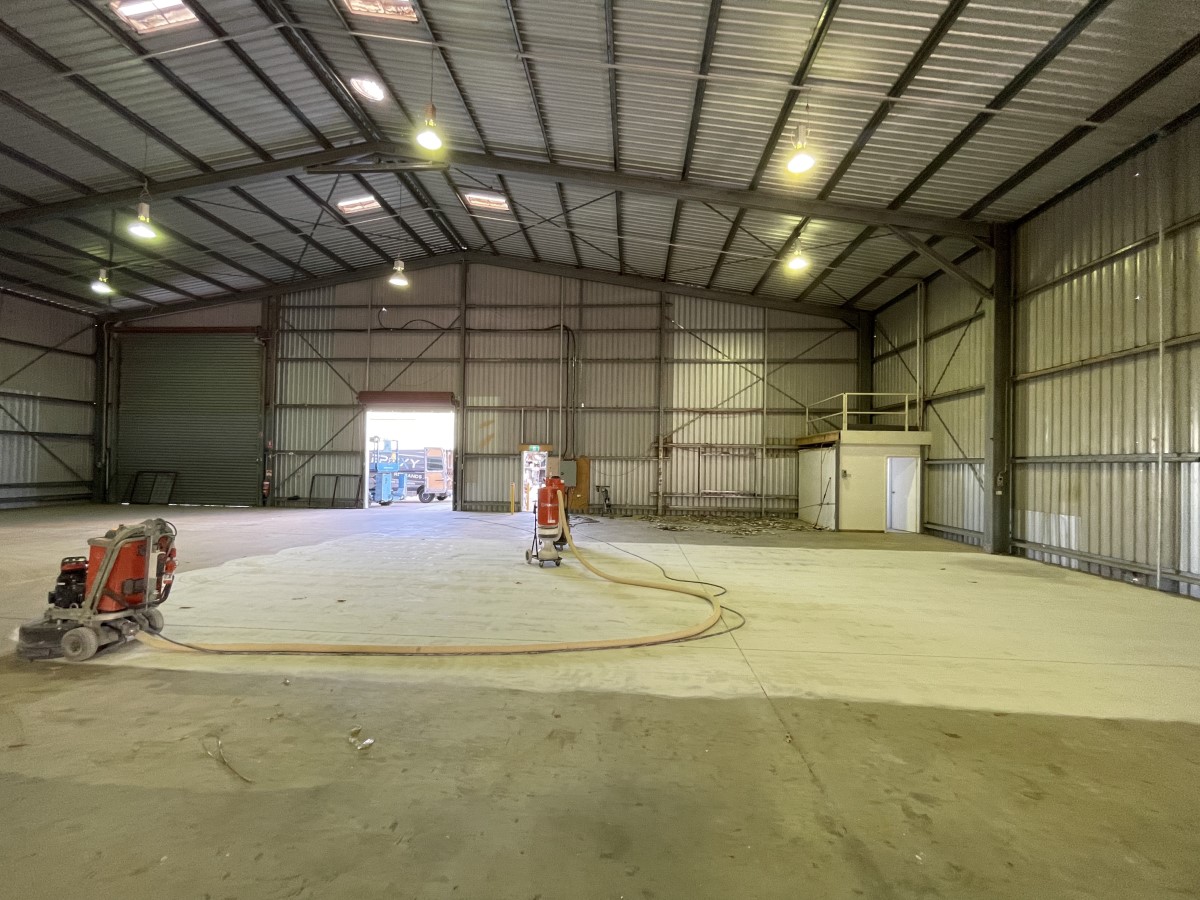
A durable floor coating starts long before the coating itself is applied. The concrete surface needs to be clean, stable, and properly prepared so the selected system can perform as intended. For property owners considering a new coating, understanding floor prep can make the project easier to plan. One important part of this process is concrete grinding, which helps prepare the existing surface for further flooring work.
Why Surface Preparation Matters
Concrete may look ready for coating while still containing dust, old adhesive, paint, grease, weak surface material, or other contaminants. Applying a coating without addressing these conditions can interfere with the connection between the coating and concrete.
Preparation is therefore more than simply sweeping the floor. The appropriate method depends on the existing surface, previous treatments, damage, moisture conditions, and type of coating planned for the project.
A proper assessment can identify what needs to be removed, repaired, or mechanically prepared before the next flooring stage begins.
What Floor Prep Usually Involves
The exact floor prep process varies from one project to another. A contractor may first inspect the surface for cracks, uneven areas, previous coatings, stains, and other problems.
Cleaning and contaminant removal may then be required. Damaged areas can also need repairs before mechanical preparation begins.
The goal is to create a suitable surface for the flooring system being installed. This does not necessarily mean making every slab look completely new. Instead, preparation focuses on creating appropriate conditions for the next stage of the project.
Understanding Concrete Grinding
Concrete grinding uses specialized machinery and abrasive tools to refine or remove material from the surface. The equipment and abrasive selection can vary according to the condition of the concrete and the desired result.
Grinding can help remove surface contaminants, old coatings, weak material, and minor irregularities. It can also create a more suitable surface profile for certain coatings.
The depth and extent of grinding should be based on the project requirements. Excessive removal is not automatically better, so the contractor should determine an appropriate approach after evaluating the slab.
When Grinding May Be Needed
Different projects can require different levels of preparation. A relatively clean slab with minimal surface issues may need less mechanical work than a floor covered with an old coating or damaged material.
Grinding may be considered when the concrete has:
-
Old coatings or adhesives
-
Surface contamination
-
Paint or other unwanted material
-
Minor uneven areas
-
Weak surface material
-
A surface requiring mechanical profiling
The appropriate preparation method should always reflect the existing floor and the coating being installed.
Consider Cracks and Repairs
Surface preparation can reveal defects that were not obvious during an initial visual inspection. Cracks, small holes, joints, and damaged sections may become more noticeable once the surface has been cleaned and mechanically prepared.
These areas should be evaluated before coating. Some cracks may require suitable repair materials, while movement-related joints may need to remain functional rather than being treated like ordinary surface defects.
A contractor should explain which repairs are included in the project and which conditions may require separate attention.
Preparation for Different Coatings
Not every coating requires the same surface profile or preparation process. Epoxy, polyurethane, polyaspartic, sealers, and other systems can have different requirements.
This is why the coating should be selected before finalizing the preparation plan. The contractor can then determine what level of cleaning, grinding, profiling, repair, or moisture evaluation is appropriate.
Choosing a preparation method first and a coating later can create unnecessary limitations. The two stages should be planned together.
Ask About Dust and Site Management
Mechanical preparation can generate significant dust and debris if appropriate equipment and containment are not used. Professional contractors may use dust-control systems designed to collect material during grinding.
Ask how the work area will be managed and whether nearby surfaces, equipment, doors, and fixtures need protection. This becomes particularly important for commercial properties where other areas may remain operational during the project.
Good site management can make the preparation stage more efficient and reduce unnecessary disruption.
Choosing a Preparation Professional
When comparing contractors, ask how they inspect concrete and determine the preparation method. A professional should be able to explain why grinding or another technique is appropriate for the particular surface.
It is also worth asking about repairs, dust control, surface profiling, moisture concerns, and the preparation required for the selected coating. A detailed explanation can help you understand what is included in the project.
Conclusion
The finished appearance of a coated floor depends heavily on what happens underneath it. Proper floor prep helps establish suitable conditions, while concrete grinding can address several common surface issues before coating begins.
If you are planning a commercial or residential flooring project in the Redlands and Brisbane region, epoxyflooringredlands.com.au can be a useful starting point for exploring professional flooring preparation and coating services. Understanding the preparation process can help you make a more informed flooring decision.